


News Archive
IHE Annual Traffic Signs Conference
- Sunday December 22, 2024
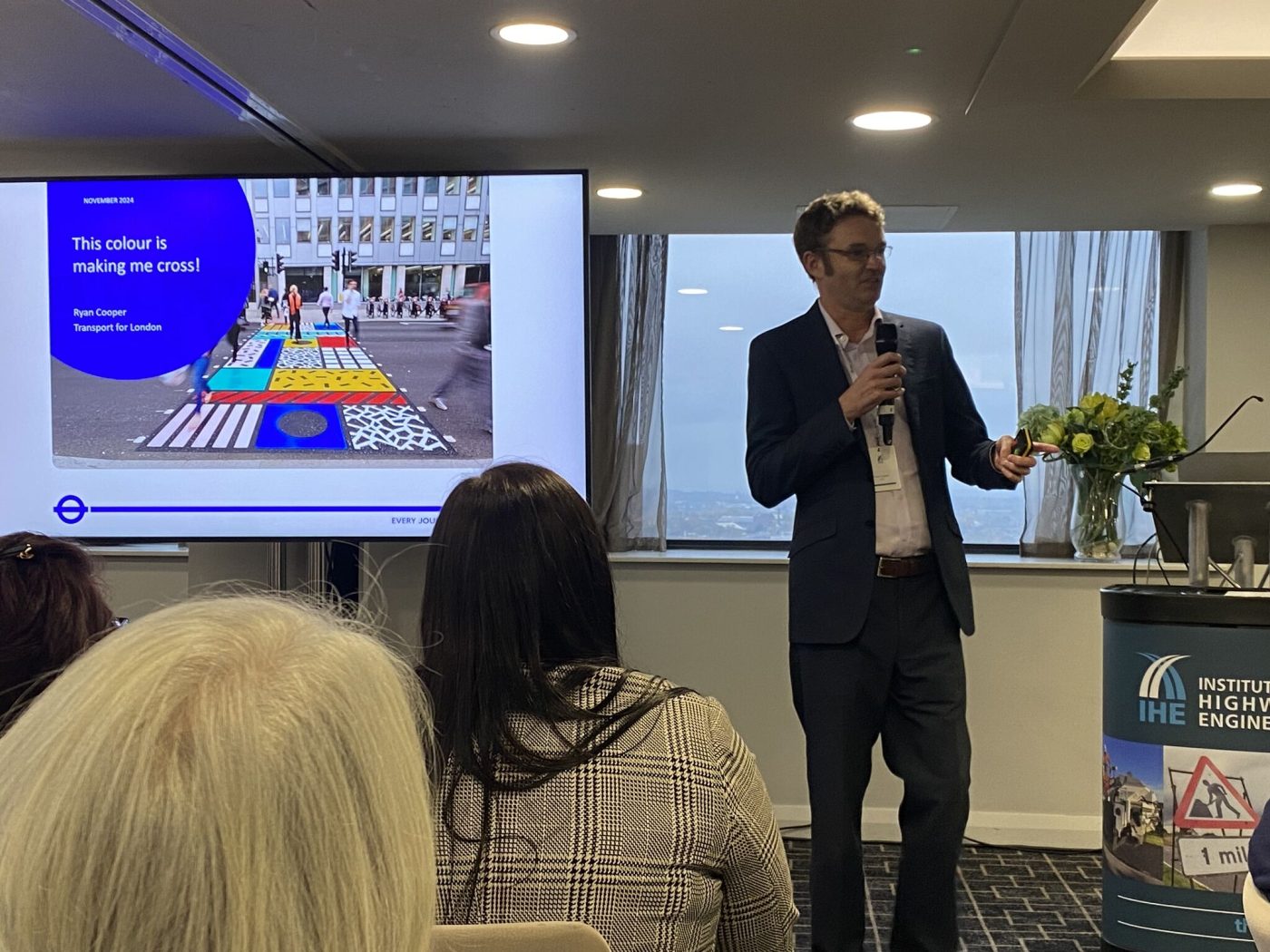
The IHE Traffic Signs Conference and Exhibition, now in its 30th year, took place in Birmingham in early November, with around 100 people attending.
Chaired by Simon Morgan of Buchanan Computing, who is also chair of the Institute’s Traffic Signs Panel, the day began with a talk on the revised edition of the Department for Transport’s public-facing ‘Know your Traffic Signs booklet’ from the department’s John Bennett.
This was followed by a presentation on new guidance for temporary situations under Chapter 8 of the Traffic Signs Manual from a double act comprising Matthew Youell of National Highways, which is uniquely responsible for this chapter within the manual, and Keith Smith of Chevron Traffic Management.
Still on the subject of temporary works, Will Credicott of Traffic December 2024 Group Signals gave a quick run through of the thinking behind the Association for Road Traffic Safety and Management’s recent Guidance on the Use of Portable Traffic Signals (GUPS).
The morning ended with Martin Anderson and Holly Hunter of Nuneaton Signs – a social enterprise that employs a number of people with physical or learning disabilities. They gave an inspiring presentation on running a sign business as a social enterprise.
After lunch, Keith Smith returned with ‘the dos and don’ts of scheme boards’ – or contractor information boards – at road works. Then Simon Morgan told the ‘Strange Case of Light Green’ – a history of the colour that has been somewhat inconsistently applied to traffic signs for decades but has finally been pinned down.
On the subject of green, Paul Aldridge of WJ spoke about the company’s work on carbon savings in the field of road markings.
The event also saw two previews of forthcoming guidance from major players in the sector, beginning with Michael Lewis of National Highways discussing a new design guide for sign foundations using sockets.
Finally, Ryan Cooper of Transport for London (TfL) discussed the inclusiveness – or otherwise – of colourful crossings and the feedback from the public that has led TfL to decide that the benefits of funky designs are not worth the disturbance they can cause some road users.