


News Archive
Lyle Andrew takes the reins at the IHE
- Monday February 17, 2025
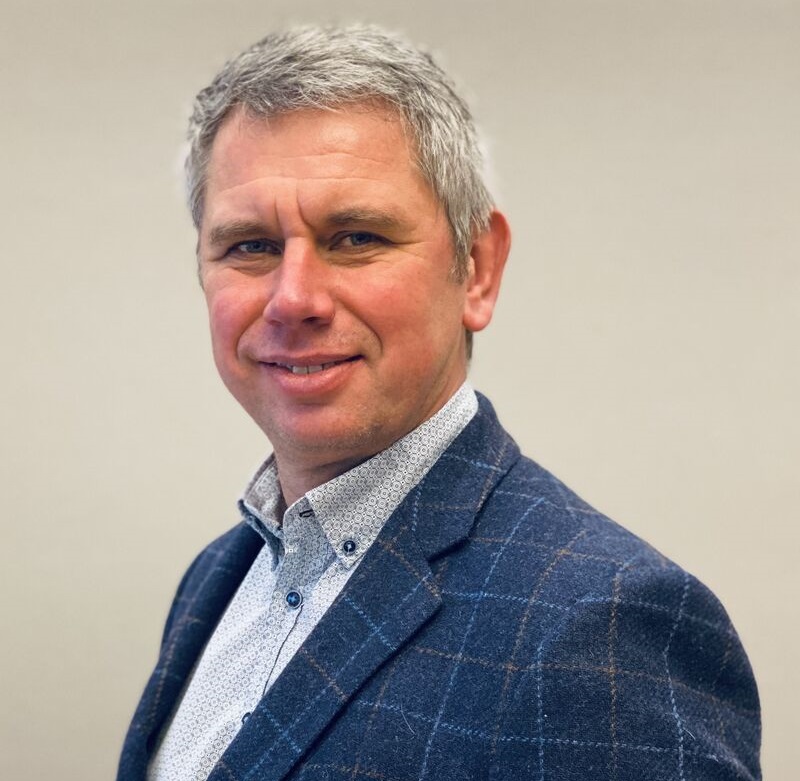
New Institute of Highway Engineers (IHE) chief executive Lyle Andrew talks to Dominic Browne about his unapologetic focus on the most important asset we have…people
There are several ways the old line works, but it goes something like this: ‘The key to success is sincerity. If you can fake that you’ve got it made.’ Mr Andrew might be the exception that proves the joke as his genuine sincerity has helped carry him to the top of the sector.
Perhaps if he faked it his life might have been easier but as usual with this thoughtful gentleman, he took a more traditional route.
As a Fellow of the IHE these past few years, his approach to his new role is to work with the grain of the organisation and get the best out of the people and systems it already has. ‘I am coming in at a good time. The IHE is just celebrating 60 years. We are still finalising the details of how to mark the occasion but it is pretty much about outreach and maybe a bit of a roadshow with the membership.
‘I have used the IHE as a networking tool. It’s all about networking, meeting people, and just having the opportunity to attend events and broaden my reach a little bit. That outreach is very much a focus for me. I want to get out to the membership and the branches and sort of reinvigorate them. I know some of the branch chairs and there’s a new branch liaison group, who are very keen to do the same.’
Mr Andrew is a self-described ‘traditionalist’ and while certainly not opposed to new ideas and innovations, he has a realist’s stance when it comes to the network.
When asked about grand visions for modern urban environments, he says: ‘Ultimately, we have to deal with what we already have. Yes, cycle lanes and other forms of transport can be incorporated, but we can’t move buildings because they don’t suit the layout of the road or move a road because people want to put a building there. People do try it, but we have to do our best with what is already there. It doesn’t make sense to try and re-engineer something as it is really expensive. When new projects are being planned all of that should be considered but unfortunately, new roads aren’t being built every day.’
Some might be tempted to see this as limiting but on the other hand, it is rooted in the art of the possible. Mr Andrew starts from the fact that the ‘day-to-day job is pretty much fighting fires in our industry at the moment, whether those be funding for highways maintenance or skills shortages’.
It is interesting to see his approach meet the wider Department for Transport (DfT) policy. One of the current debates in the sector is how the DfT might establish more accountability over local authority performance in highways maintenance. Ministers recently announced an extra £500m for maintenance in 2025-26 but said that ‘built-in incentives’ mean that 25% of this extra cash is being held back until authorities have shown value for money, the right data collection and proactive maintenance. Details in due course, of course.
Mr Andrew accepts the need for accountability but makes a perfectly reasonable argument that almost seems novel these days: in short, we need to check the performance of a system, but it will only work as well as the people tasked with managing it.
‘All of this comes back to people; well trained, experienced, competent people. No matter what system you have, at the end of the day it’s managed by people and the work is done by people.’
In this age of AI, big data and systems thinking, people are sometimes seen as surplus to requirements – either inconsequential or a variable to be managed out. Not only is this cold-blooded, but it could also stray into ‘ghost in the machine’ thinking. You might say that Mr Andrew’s philosophy is a critique of false or unhelpful dualism; real change has to come through individuals and systems working as one. If you like, he aims to improve the system by waking the ghosts inside it.
There is one aspect of Mr Andrew’s career that raises his own inner conflict and that is between his roots and his desire to wander.
He grew up in the countryside in County Antrim, Northern Ireland, and when he was 18 took a job in a local quarry, owned by Wimpey at the time, as a lab technician. After working a couple of years in the lab, he moved into the contracting division as a trainee supervisor, then became contracts manager and completed his DAPS (Doncaster Assisted Private Study) course in asphalt. Around the turn of the century, he moved to Whitemountain Quarries and did various roles there, before being made a business development director. He left in 2013 to start his own business consultancy. He was also executive director of the Institute of Asphalt Technology from 2018 to 2024, which teed him up nicely for the top job at IHE.
‘I always worked in Northern Ireland. I had a few opportunities to go abroad but the timing was never right… I sometimes regret that.’ He still lives on his family’s farmland in Northern Ireland, having built his own house there. He adds that if he could give any advice to his younger self, it would be to ‘take the opportunities to broaden your horizons when you can’.
He doesn’t seem burdened by any missed opportunities, but he does stress the value of looking for the best of both worlds. His advice to young people coming into the sector is to consider degree apprenticeship opportunities that combine work with education: ‘To me, it’s just a much better option to do that degree apprenticeship – giving you education and workplace experience at the same time. I would have loved that opportunity when I was younger.’
It should be stressed that Mr Andrew is not afraid to try new things. He is president of his local rugby club, which plays in the all-Ireland league no less, and has also appeared in the hit TV series The Fall starring Gillian Anderson. His role was something like ‘doorman number one’ and was part of work he picked up as a TV and film extra, just for fun, supporting the the Northern Ireland film industry. It is quite comic to think of all those famous people on set faking sincerity, and Mr Andrew standing around waiting for his turn as a lowly extra, but being the absolute genuine item.
Article courtesy of Dom Browne, Highways Magazine